



 WhatsApp
  Facebook
 Send Email
How Is Beer Made? A Complete Guide to the Commercial Brewing Process
Beer is one of the world's oldest and most widely consumed alcoholic beverages. While the basic ingredients are relatively simple—malt, hops, yeast, and water—producing consistent, high-quality beer on a commercial scale requires carefully controlled processes and properly designed brewing equipment.
From milling and mashing to wort boiling, fermentation, maturation, carbonation, and packaging, every stage of the brewing process can influence the final beer.
In this guide, Supermax, a professional brewery equipment manufacturer, explains the complete commercial beer brewing process and introduces the main equipment used at each stage.
1. What Are the Main Ingredients of Beer?
Before understanding the brewing process, it is useful to know the four basic ingredients of beer.
Malt
Malted barley is the most common source of fermentable sugars in beer. During the mashing process, enzymes in the malt convert starch into sugars that yeast can ferment.
Different malt varieties contribute to:
·Beer color
·Flavor
·Aroma
·Body
·Alcohol content
Depending on the beer style, brewers may also use wheat, rye, corn, rice, or other grains.
Hops
Hops provide bitterness, aroma, and flavor. They also contribute to the stability of beer.
The variety of hops, quantity, timing, and method of addition all influence the final characteristics of the beer.
Yeast
Yeast is responsible for fermentation.
During fermentation, yeast consumes fermentable sugars and produces alcohol, carbon dioxide, and various flavor compounds.
Different yeast strains are used for different beer styles. Ale yeast generally works at warmer temperatures, while lager yeast typically requires cooler fermentation conditions.
Water
Water is the primary ingredient in beer and makes up most of the finished product.
Water chemistry can affect:
·Mash performance
·Hop bitterness
·Flavor
·Yeast activity
·Finished beer quality
For commercial breweries, maintaining consistent water quality is therefore an important part of process control.
2. What Is the Commercial Beer Brewing Process?
Although brewing methods vary between breweries and beer styles, the basic commercial brewing process can be summarized as:
Milling → Mashing → Lautering → Wort Boiling → Whirlpool → Wort Cooling → Fermentation → Maturation → Carbonation → Packaging
Each stage has a specific purpose and requires appropriate equipment.
3. Step 1: Malt Milling
The brewing process begins with milling the malt.
Whole malted grains are passed through a malt mill to crack the grain kernels and expose the starch inside while keeping the husks relatively intact.
The milling degree is important.
If the malt is milled too finely, it may create filtration problems during lautering. If it is too coarse, starch conversion and extract efficiency may be reduced.
For this reason, commercial breweries typically use adjustable malt mills that can be configured according to the brewing process.
Main Equipment
·Malt mill
·Grain hopper
·Grain conveyor or auger
·Dust collection system
4. Step 2: Mashing
After milling, the crushed malt is mixed with hot brewing water in the mash tun.
During mashing, enzymes naturally present in the malt convert starches into fermentable and non-fermentable sugars.
Temperature control is particularly important during this stage because different enzymes perform most effectively within different temperature ranges.
Depending on the recipe, the brewer may use a single temperature rest or multiple temperature rests.
The main objectives of mashing are to:
·Convert starch into sugars
·Extract flavor and color from the malt
·Achieve the desired wort composition
·Control fermentability
·Improve brewing consistency
Main Equipment
Mash Tun
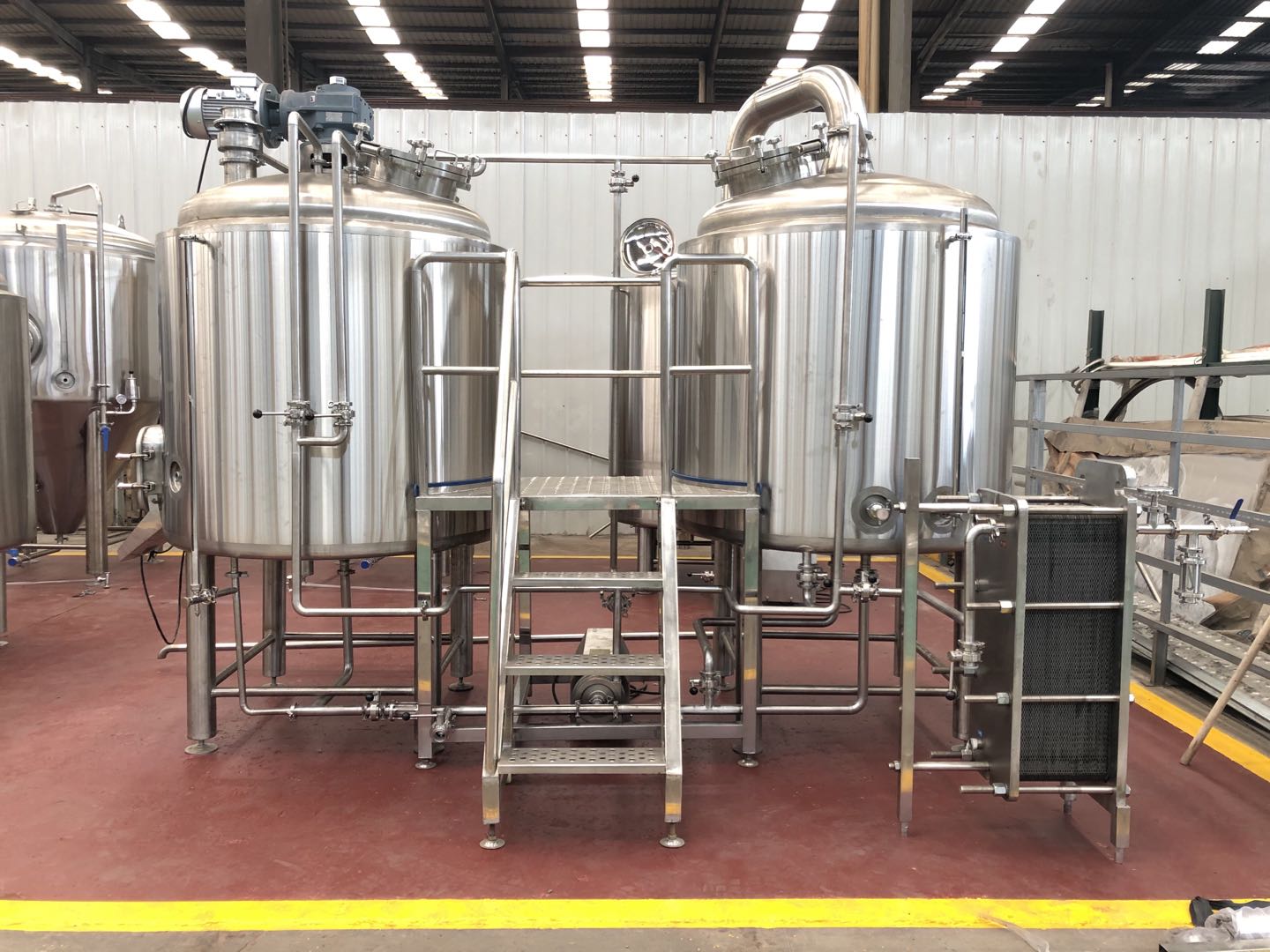
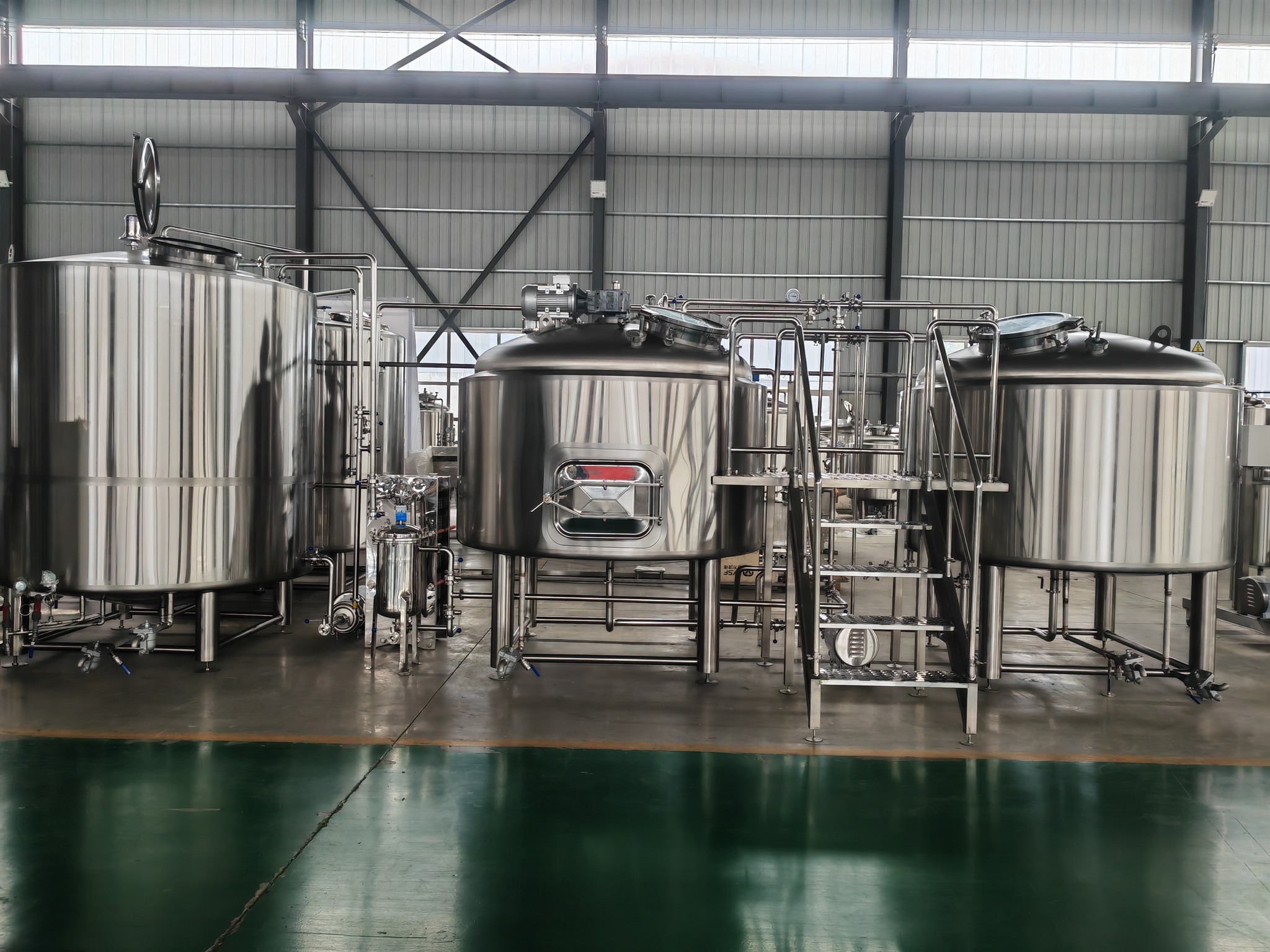
A commercial mash tun is designed to provide efficient mixing, heating, and temperature control.
Depending on the brewery configuration, the mash tun may be combined with another vessel or designed as part of a multi-vessel brewhouse.
5. Step 3: Lautering
After mashing, the liquid wort must be separated from the spent grain.
This process is called lautering.
The mash is transferred to or retained in a lauter tun. A false bottom or filtration system allows wort to pass through while retaining the grain bed.
Sparging may then be used to rinse the grain bed with hot water and recover additional extract.
Effective lautering can influence:
·Brewhouse efficiency
·Wort clarity
·Extract yield
·Production consistency
Main Equipment
·Lauter tun
·False bottom
·Rake system
·Wort collection system
·Sparging system
6. Step 4: Wort Boiling
After lautering, the wort is transferred to the brew kettle and brought to a controlled boil.
Boiling performs several important functions.
Sterilization
Boiling helps reduce unwanted microorganisms in the wort.
Hop Utilization
Hops can be added at different stages of the boil to provide bitterness, flavor, and aroma.
Protein Coagulation
Boiling promotes the formation of hot break, which helps separate certain proteins and other compounds from the wort.
Evaporation
A controlled amount of water is evaporated to achieve the desired wort concentration and original gravity.
Main Equipment
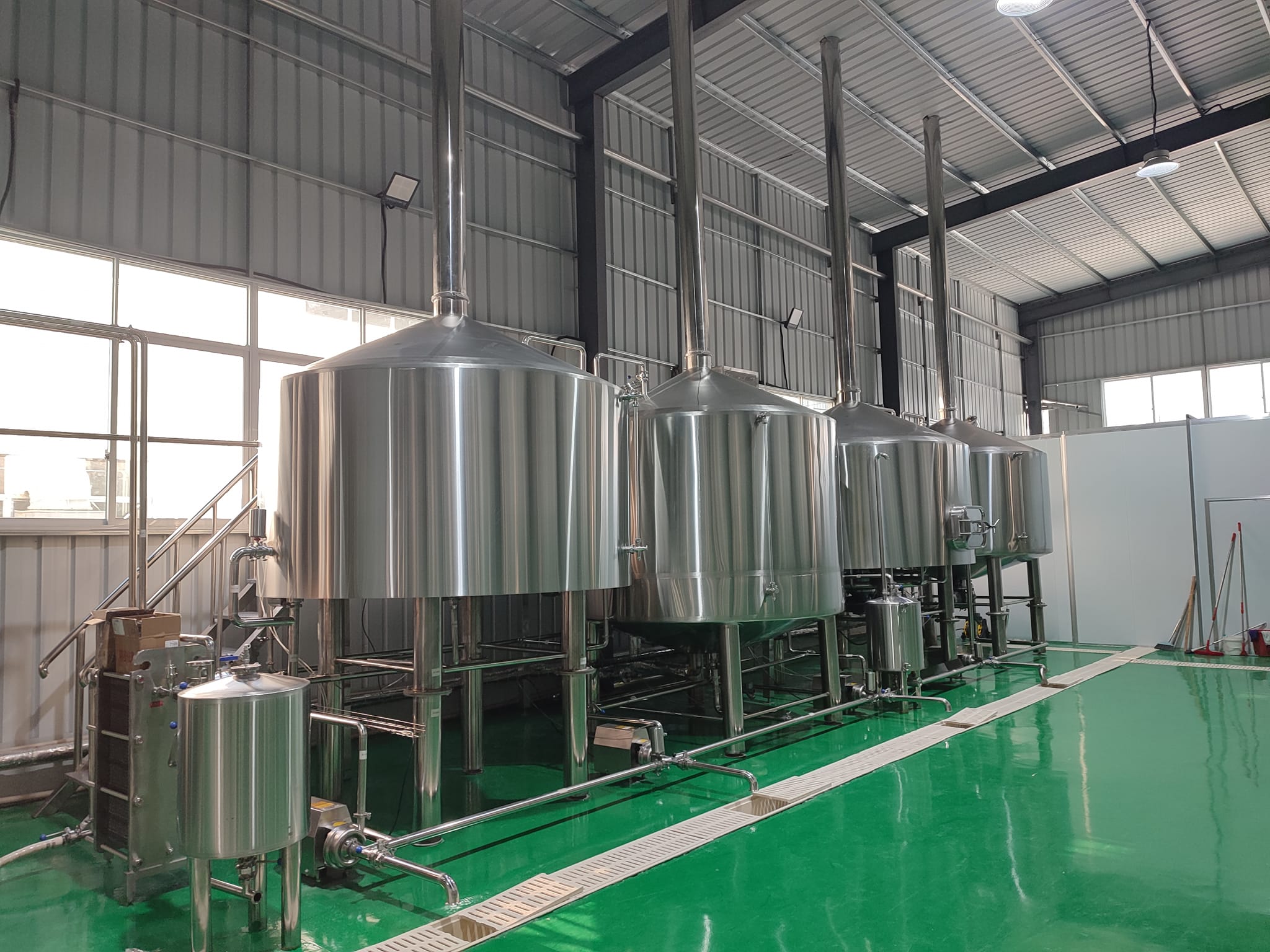
Brew Kettle
Commercial brew kettles may use different heating methods, including:
·Steam heating
·Electric heating
·Direct-fire heating
The appropriate heating system depends on brewery capacity, available utilities, energy requirements, and overall project design.
7. Step 5: Whirlpool
After boiling, hot wort is transferred to a whirlpool vessel or whirlpool section of the brewhouse.
Controlled rotational flow causes hop particles, trub, and other solids to collect toward the center of the vessel.
The relatively clear wort can then be transferred for cooling.
A properly designed whirlpool system can improve wort clarification and process consistency.
Main Equipment
Whirlpool Tank
Depending on the brewhouse design, the whirlpool can be an independent vessel or integrated into another brewhouse vessel.
8. Step 6: Wort Cooling
Before fermentation, the hot wort needs to be cooled to a temperature suitable for the selected yeast.
Commercial breweries commonly use a plate heat exchanger to cool wort efficiently.
Depending on the process, oxygen may also be introduced into the cooled wort under controlled conditions before yeast pitching.
The cooled wort is then transferred into the fermentation tank.
Main Equipment
·Plate heat exchanger
·Wort pump
·Oxygenation or aeration system
·Cooling system
·Fermentation tank
Efficient wort cooling helps minimize contamination risks and allows fermentation to begin under controlled conditions.
9. Step 7: Fermentation
Fermentation is one of the most important stages of beer production.
The cooled wort is transferred to a fermentation tank, where yeast is added.
The yeast consumes fermentable sugars and produces:
Alcohol + Carbon Dioxide + Flavor Compounds
Fermentation temperature, pressure, yeast strain, oxygen management, and fermentation time can all affect the final beer.
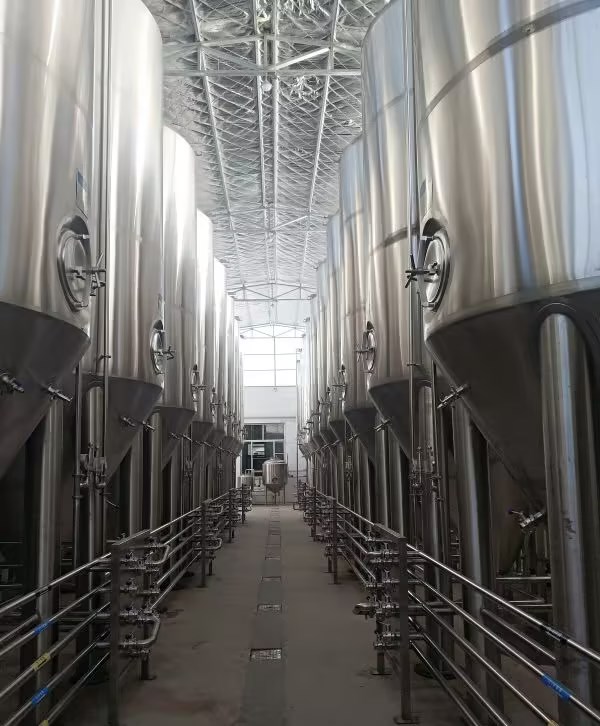
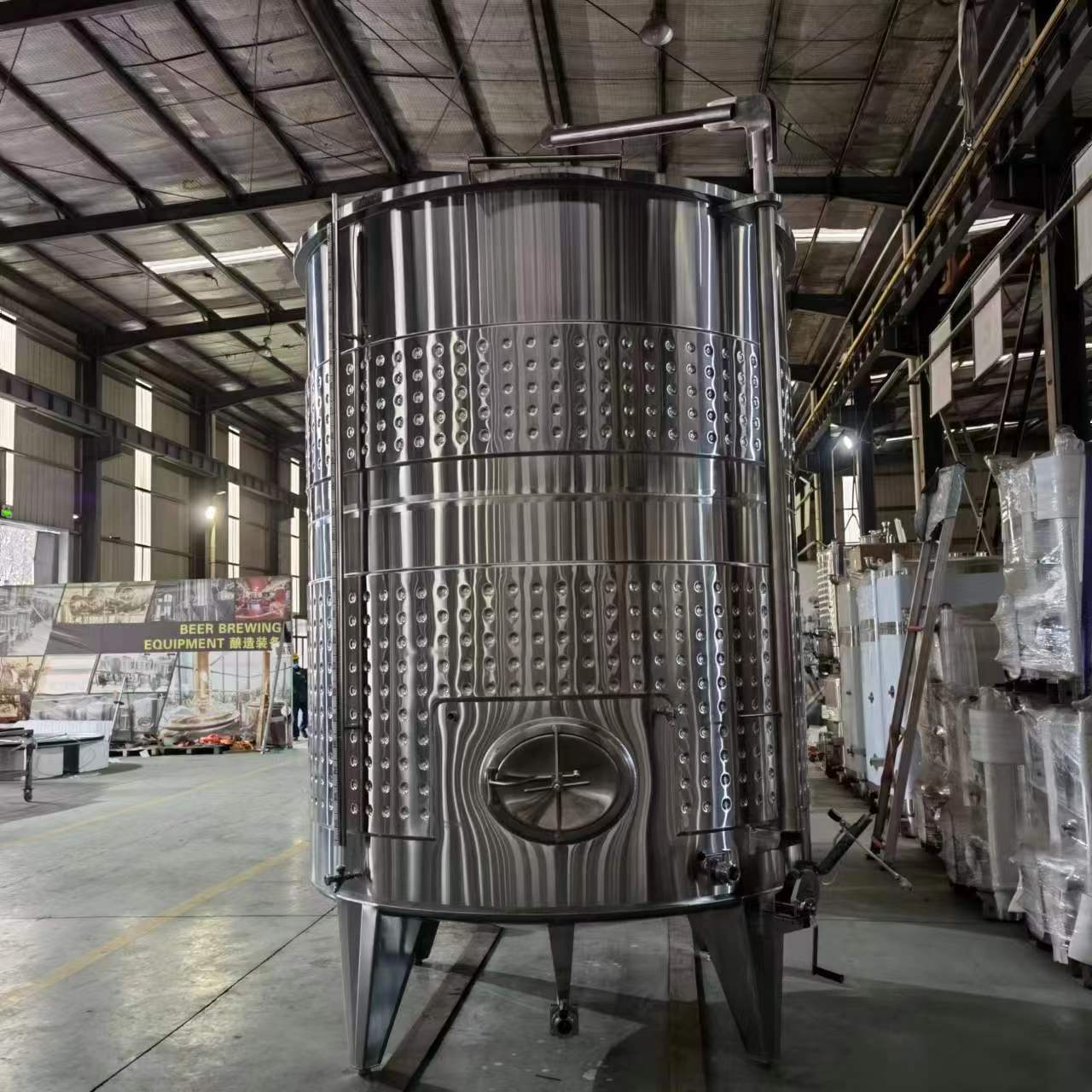
Commercial breweries commonly use cylindrical conical fermentation tanks.
The conical bottom allows yeast and sediment to collect at the bottom of the tank, making yeast removal, yeast harvesting, and cleaning more convenient.
Main Equipment
Cylindrical Conical Fermentation Tank
Typical features may include:
·Cooling jacket
·Pressure gauge
·Safety valve
·CIP spray device
·Sample valve
·Dry-hopping port
·Yeast outlet
·Sanitary fittings
10. Step 8: Maturation and Conditioning
After primary fermentation, beer may require additional maturation and conditioning.
During this stage, the beer develops a more balanced flavor profile while certain unwanted compounds can be reduced.
Depending on the brewery design and beer style, maturation can take place in:
·Fermentation tanks
·Unitanks
·Brite beer tanks
What Is a Unitank?
A unitank is a pressure-rated vessel designed to perform multiple functions, such as fermentation, conditioning, and, depending on the process, carbonation.
This can simplify the production process and reduce the need to transfer beer between multiple tanks.
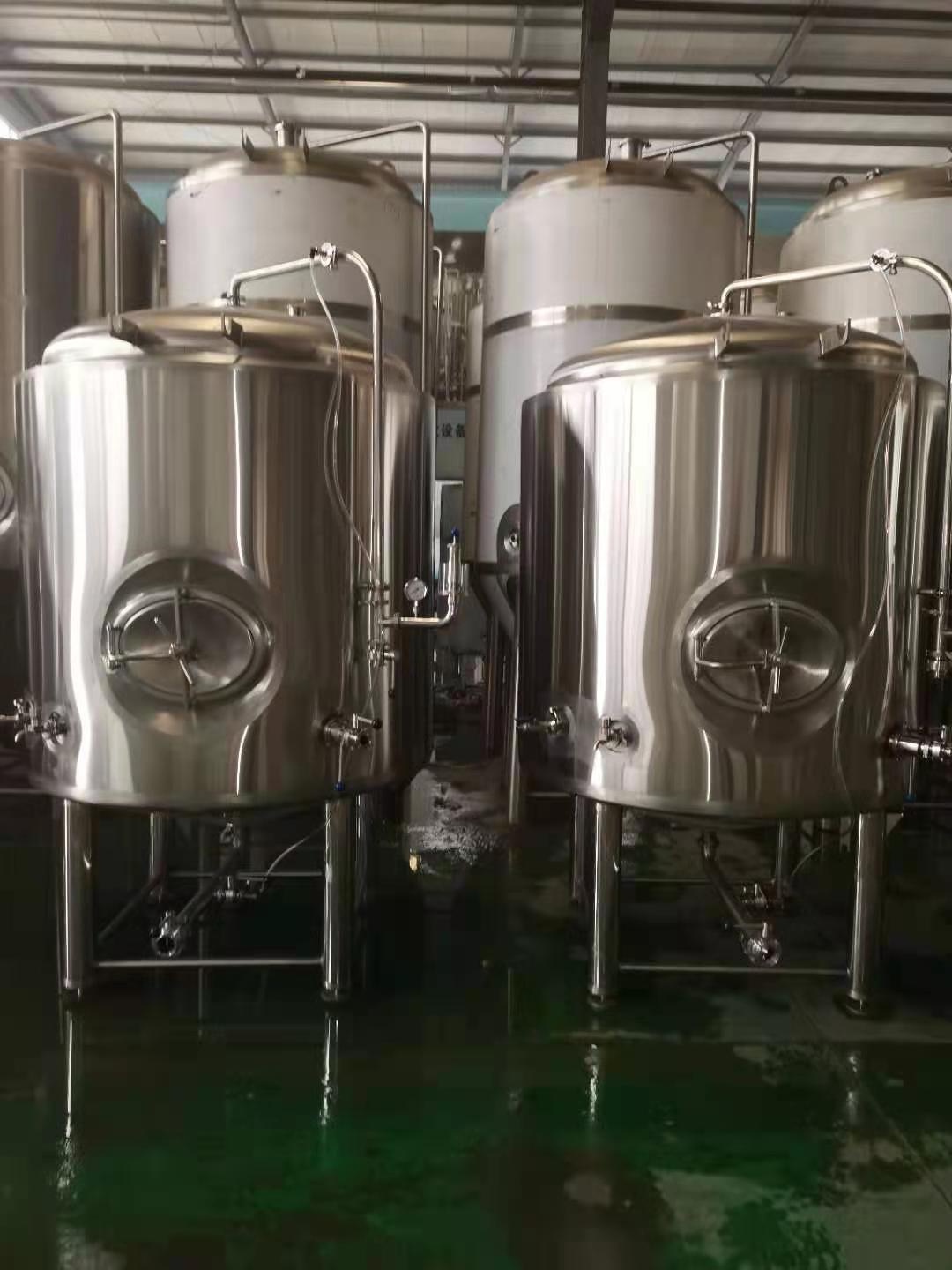
What Is a Brite Beer Tank?
A brite beer tank, also called a bright tank or serving tank, is commonly used for:
·Beer conditioning
·Clarification
·Carbonation
·Temporary storage
·Packaging preparation
The choice between fermentation tanks, unitanks, and brite tanks depends on the brewery's production requirements.
11. Step 9: Carbonation
Beer can be naturally carbonated during fermentation or carbonated by injecting CO₂ under controlled conditions.
Commercial breweries need to maintain consistent carbonation because it affects:
·Mouthfeel
·Aroma perception
·Foam characteristics
·Drinking experience
·Packaging performance
Brite beer tanks are commonly used when breweries require controlled carbonation before packaging.
12. Step 10: Clarification and Filtration
Not every beer requires filtration.
Some craft breweries intentionally produce naturally hazy or unfiltered beer, while other beer styles require a bright and clear appearance.
Depending on the desired product, breweries may use:
·Natural settling
·Cold conditioning
·Filtration
·Centrifugation
·Fining
The appropriate method depends on the beer style, production process, and desired final characteristics.
13. Step 11: Beer Packaging
Once the beer reaches the desired quality, it can be packaged.
The most common commercial packaging formats include:
·Kegs
·Bottles
·Cans
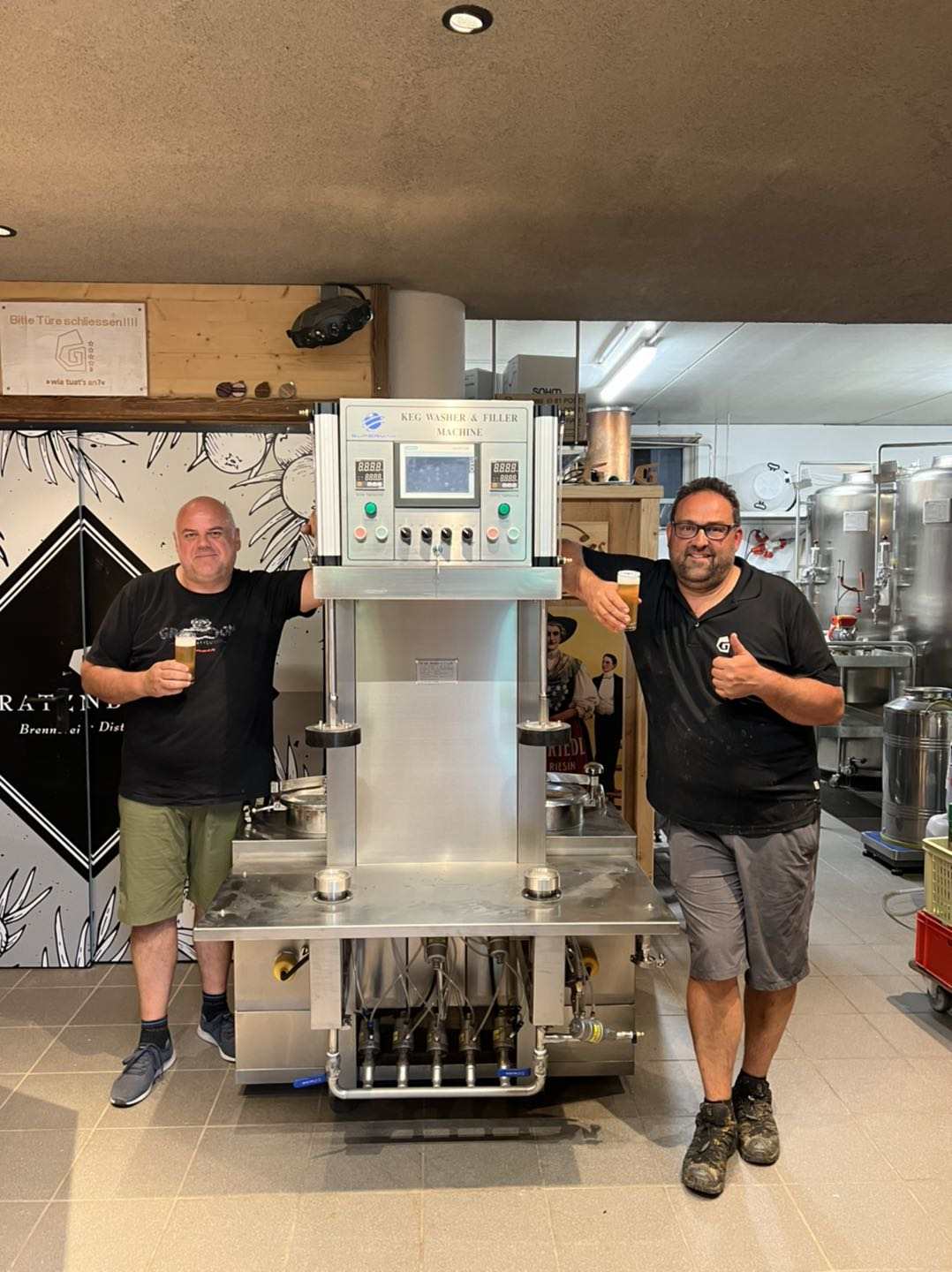
Keg Filling
Kegs are widely used for draft beer and are particularly common in restaurants, bars, hotels, and taprooms.
Bottle Filling
Bottle filling systems range from manual and semi-automatic machines to fully automated packaging lines.
Can Filling
Cans are lightweight, easy to transport, and convenient for retail distribution, making them increasingly popular among craft and commercial breweries.
Larger breweries may integrate:
·Bottle or can rinsing
·Filling
·Seaming or capping
·Labeling
·Conveying
·Packaging
into a complete automated line.
14. Step 12: Cleaning and Sanitation
Cleaning and sanitation are critical to commercial beer production.
Even a sophisticated brewing system cannot consistently produce high-quality beer without proper cleaning and sanitation.
Commercial breweries commonly use CIP (Clean-in-Place) systems to clean tanks, pipelines, heat exchangers, and other process equipment without extensive disassembly.
A typical cleaning cycle may include:
1. Pre-rinse
2. Caustic cleaning
3. Intermediate rinse
4. Acid cleaning when required
5. Final rinse
6. Sanitization
The actual cleaning procedure should be designed according to the equipment, cleaning chemicals, temperature, concentration, and brewery process.
15. What Equipment Does a Commercial Brewery Need?
A complete commercial brewery may require a combination of systems.
Raw Material Handling
·Malt mill
·Grain hopper
·Grain conveyor
·Grain handling equipment
Brewhouse
·Mash tun
·Lauter tun
·Brew kettle
·Whirlpool tank
·Hot liquor tank
·Cold liquor tank
Fermentation & Conditioning
·Fermentation tanks
·Unitanks
·Brite beer tanks
·Yeast handling equipment
Cooling
·Glycol chiller
·Glycol tank
·Pumps
·Plate heat exchanger
Cleaning
·CIP system
·CIP tanks
·Cleaning pumps
Packaging
·Keg washer and filler
·Bottle filling machine
·Can filling machine
·Labeling equipment
·Conveyors
Control & Utilities
·Control panel
·Pumps
·Valves
·Sanitary piping
·Heating system
·Compressed air system where required
The exact equipment list should be designed according to the brewery's production requirements rather than simply selecting individual machines.
16. How Do You Choose the Right Brewery Equipment?
There is no universal brewery configuration that works for every brewery.
Before purchasing brewing equipment, several factors should be considered.
1. Production Capacity
How much beer do you plan to produce per day, month, or year?
2. Brewhouse Batch Size
The brewhouse determines how much wort can be produced in each brewing cycle.
3. Brews Per Day
A smaller brewhouse operated multiple times per day can sometimes achieve a similar production target to a larger system operated fewer times.
4. Fermentation Cycle
The length of fermentation and conditioning determines the required fermentation capacity.
5. Beer Styles
Different beer styles may require different temperatures, fermentation conditions, and production processes.
6. Available Space
Equipment dimensions, ceiling height, access routes, tank layout, and future expansion should all be considered.
7. Automation Level
Manual, semi-automatic, and automatic systems provide different levels of process control, labor requirements, and investment.
8. Future Expansion
A brewery should ideally be designed with future production growth in mind.
17. How Supermax Helps Breweries Build the Right Equipment System
Supermax is a professional brewery equipment manufacturer specializing in customized brewing equipment and complete brewery solutions.
Rather than treating brewery equipment as a collection of separate tanks, Supermax focuses on designing an integrated system in which the brewhouse, fermentation system, cooling system, CIP system, packaging equipment, piping, pumps, valves, and control system work together.
Depending on the project requirements, Supermax can provide:
·Brewhouse systems
·Fermentation tanks
·Unitanks
·Brite beer tanks
·Glycol cooling systems
·CIP systems
·Keg washing and filling equipment
·Bottle and can filling equipment
·Brewery control systems
·Customized brewery solutions
Equipment can be configured according to:
·Required production capacity
·Beer styles
·Brewhouse configuration
·Brewery layout
·Heating method
·Automation requirements
·Utility conditions
·Future expansion plans
Whether you are planning a small craft brewery, brewpub, microbrewery, or larger commercial brewery, choosing the right equipment configuration is an important first step toward establishing an efficient and reliable brewing operation.
19. Conclusion
Commercial beer production is a carefully controlled process that combines raw materials, brewing technology, fermentation science, temperature management, sanitation, and packaging.
From malt milling, mashing, and lautering to wort boiling, whirlpooling, cooling, fermentation, maturation, carbonation, and packaging, every stage can influence the quality and consistency of the final beer.
For this reason, brewery equipment should be selected as part of an integrated production system rather than as a collection of individual machines.
As a professional brewery equipment manufacturer, Supermax provides customized equipment and complete brewery solutions designed around each customer's production capacity, beer styles, facility conditions, and future development plans.
Planning a new brewery or expanding an existing brewery? Contact Supermax to discuss your brewing equipment requirements and develop a customized solution for your project.

-
1000L Craft Beer Equipment
Read More -
500L Beer Brewhouse
Read More -
100L-300L Beer Brewing Equipme
Read More -
2000L Brewing Beer Equipment
Read More -
3000L Turnkey Brewery Equipmen
Read More -
300L-5000L Fermentation System
Read More -
300L-5000L Brite Beer Tanks
Read More -
Fruit Wine Equipment
Read More -
Beer Filling System
Read More -
Auxiliary Products
Read More