



 WhatsApp
  Facebook
 Send Email
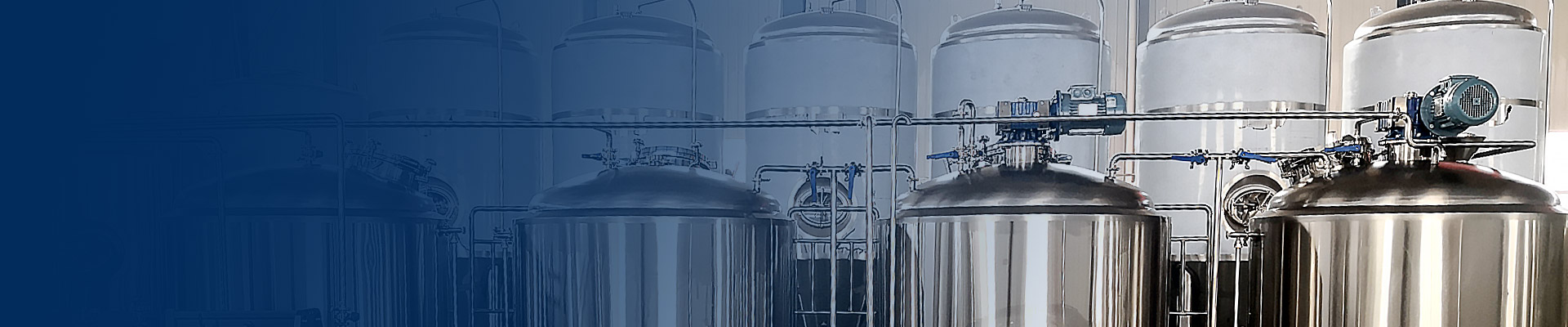
How to Design a 1000L Brewery: Equipment List and Layout Guide
Designing a 1000L craft brewery requires more than simply selecting a 1000L brewhouse. Production capacity, equipment configuration, brewing workflow, available floor space, utilities, and future expansion all need to be considered together.
A well-designed brewery layout can improve production efficiency, simplify operation and maintenance, reduce unnecessary energy consumption, and provide a solid foundation for long-term growth.
For investors planning to establish a microbrewery, brewpub, restaurant brewery, or small commercial beer production facility, a 1000L brewing system can be a practical and flexible solution.
1. Production Capacity of a 1000L Brewery
A 1000L brewing system generally refers to a brewhouse designed to produce approximately 1,000 liters of wort per brewing batch.
Actual annual production depends on several factors, including beer style, recipe, brewhouse efficiency, fermentation time, number of fermenters, and production schedule.
By optimizing the brewing and fermentation schedule, a 1000L system can serve brewpubs, restaurants, craft breweries, and growing regional beer brands.
When planning a brewery, it is important to look beyond the 1000L brewhouse capacity. The number of fermenters, cooling capacity, packaging equipment, and utility systems should also be matched to the target production volume.
2. Main Equipment for a 1000L Brewery
A complete 1000L craft brewery normally consists of several key equipment sections.
2.1 1000L Brewhouse
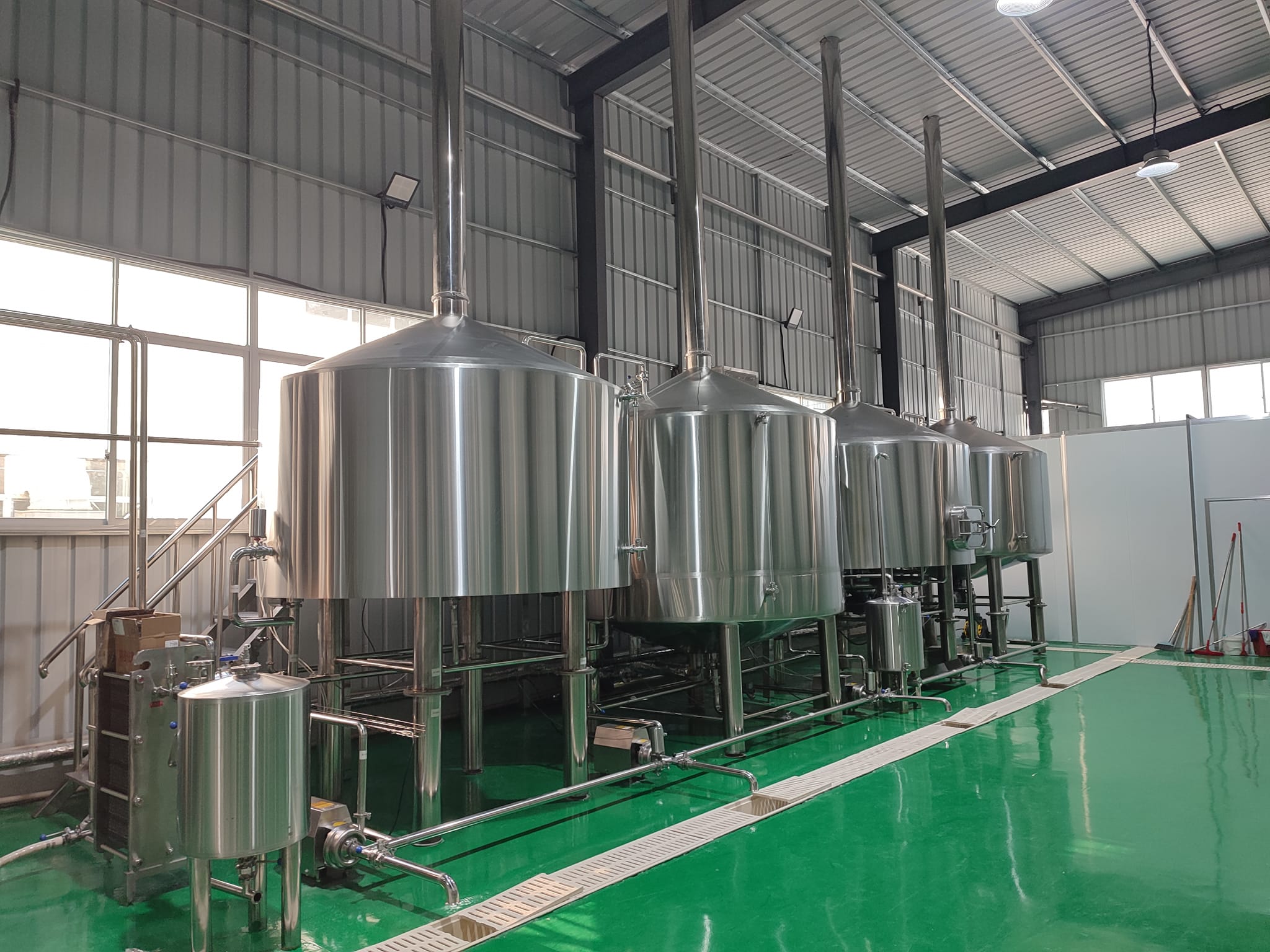
The brewhouse is the heart of the brewery. It is responsible for mashing, lautering, wort boiling, and whirlpooling.
A typical 1000L brewhouse may include:
- Mash/boil kettle
- Lauter tun
- Whirlpool function or whirlpool tank
- Wort pumps
- Hot liquor system
- Control panel
- Brewing pipes and valves
Depending on the brewing process, production requirements, and available space, breweries can choose two-vessel, three-vessel, or four-vessel brewhouse configurations.
A two-vessel system is compact and suitable for projects with limited space, while multi-vessel systems can provide greater process flexibility and higher production efficiency.
2.2 Fermentation Tanks
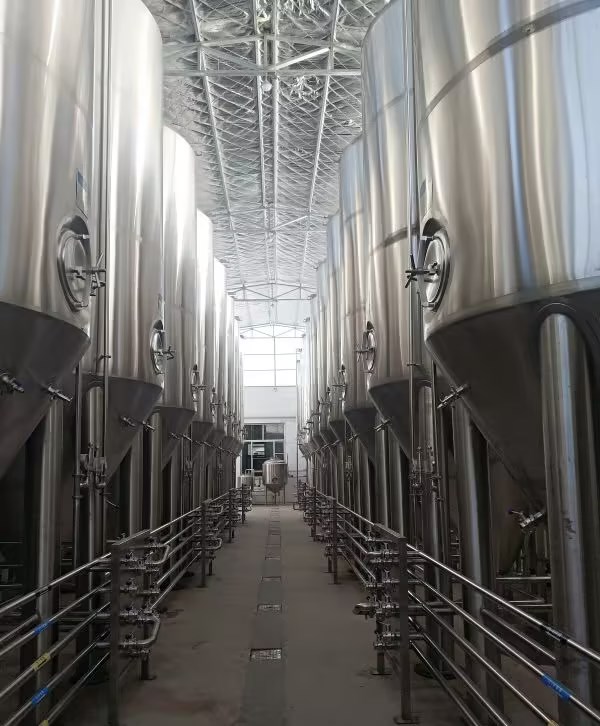
Fermentation tanks are one of the most important factors determining the brewery's overall production capacity.
A 1000L brewery may be equipped with four, six, eight, or more fermenters depending on the target production volume and fermentation schedule.
Typical fermenter features include:
- Conical tank design
- Independent temperature control
- Pressure gauge
- Safety valve
- CIP connection
- Sampling valve
- Cooling connections
- Beer outlet
If future expansion is expected, it is recommended to reserve sufficient space and utility connections for additional fermentation tanks.
2.3 Cooling System
Wort cooling is a critical step between the brewhouse and fermentation process.
A typical cooling system includes:
- Plate heat exchanger
- Cold water tank
- Glycol or chilled-water system
- Chiller
- Cooling pumps
An efficient cooling system allows hot wort to be rapidly cooled to the appropriate pitching temperature while helping to reduce the risk of contamination.
2.4 CIP Cleaning System
CIP, or Clean-In-Place, systems are used to clean and sanitize brewhouse vessels, fermenters, pipelines, and other beer-contact equipment.
For commercial breweries, an efficient CIP system can reduce manual cleaning work, improve cleaning consistency, and support reliable brewery hygiene.
A 1000L brewery can use a mobile CIP cart for a compact setup or an independent two-tank or three-tank CIP system for larger commercial operations.
2.5 Beer Packaging Equipment
The choice of packaging equipment depends on the brewery's sales and distribution strategy.
Common options include:
- Bottling equipment
- Canning equipment
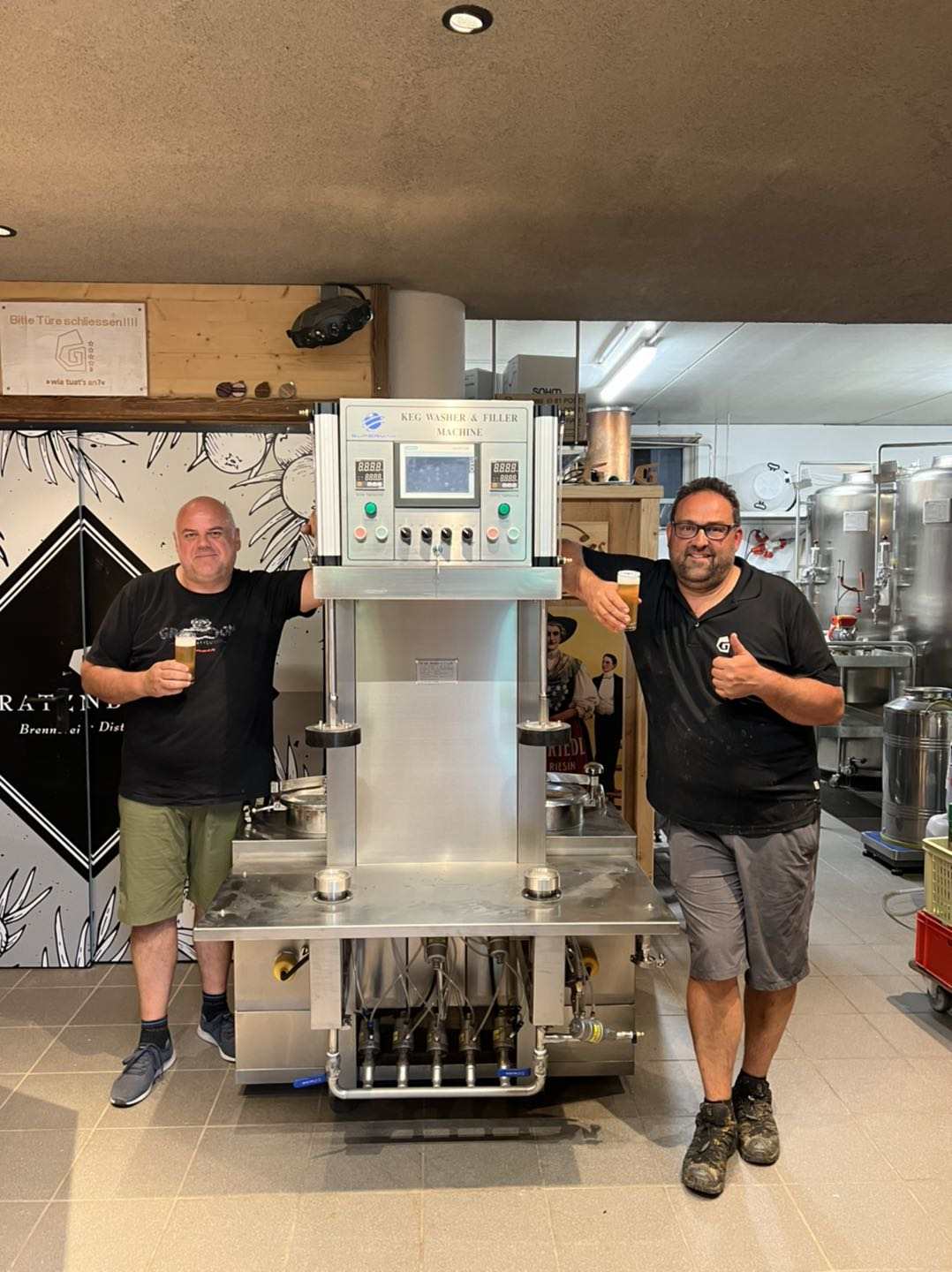
- Keg filling equipment
- Combined keg and bottle/can packaging systems
For breweries supplying mainly bars and restaurants, a keg filling system may be the most practical solution. Breweries targeting retail markets may consider adding a canning or bottling line.
3. 1000L Brewery Layout Design
A good brewery layout should follow the natural production flow:
Raw Materials → Milling → Brewhouse → Fermentation → Packaging → Finished Products
Additional areas should also be planned for:
- Refrigeration equipment
- CIP cleaning
- Hot water system
- Electrical/control equipment
- Drainage
- Operator access
- Equipment maintenance
The layout should minimize unnecessary movement of materials and personnel while providing sufficient working and maintenance space around each piece of equipment.
4. Key Factors in Brewery Layout Planning
Equipment Working Space
The footprint of the equipment itself is only part of the calculation. Adequate space is also required for operators to access valves, connect pipes, perform cleaning, and carry out maintenance.
Drainage
Breweries use significant amounts of water for brewing and cleaning. Proper floor drainage is therefore essential.
Drainage channels and floor drains should be carefully planned around the brewhouse, CIP area, and fermentation zone.
Floor Load Capacity
Brewhouse vessels, hot liquor tanks, and fully filled fermenters can be extremely heavy. The structural load capacity of the brewery floor should therefore be checked during the facility design stage.
Ventilation and Exhaust
Brewing and wort boiling generate considerable amounts of steam. Proper ventilation and exhaust systems can improve the working environment and help prevent excessive condensation.
Future Expansion
If additional fermenters, packaging equipment, or another brewhouse may be added in the future, expansion space should be reserved during the initial layout design.
5. Example Equipment Configuration for a 1000L Brewery
A basic 1000L craft brewery may include the following equipment:
| Equipment | Typical Configuration |
|---|---|
| Brewhouse | 1000L, 2–4 vessel |
| Fermenters | 1000L, 4–8 units or customized |
| Cold Water Tank | 1 unit |
| Chiller | 1 set |
| CIP System | 1 set |
| Plate Heat Exchanger | 1 set |
| Beer/Wort Pumps | 1–2 units or process-dependent |
| Hot Water System | 1 set |
| Control System | PLC/automatic control optional |
| Packaging Equipment | Keg, bottle, or can packaging according to requirements |
The configuration above is only a typical reference. The final equipment list should be customized according to beer styles, brewing frequency, fermentation time, available building space, and target annual production.
6. Why Choose a 1000L Brewing System?
A 1000L brewing system offers a good balance between flexibility and commercial production capacity.
It can meet the needs of brewpubs, restaurants, and small-to-medium craft breweries while allowing production capacity to grow by adding more fermenters, conditioning tanks, and packaging equipment.
The system can also be customized according to the brewery's business model and production requirements, including brewhouse configuration, tank quantity, automation level, heating method, cooling system, and packaging solution.
7. Conclusion
Designing a 1000L brewery is not simply a matter of choosing a 1000L brewhouse. A successful brewery project requires integrated planning of production capacity, equipment configuration, brewing workflow, facility layout, utilities, cleaning systems, and future expansion.
A well-planned brewery can create a smoother production workflow, improve equipment utilization, simplify operation and maintenance, and provide sufficient flexibility for future growth.
If you are planning a 1000L craft brewery project, it is recommended to develop the overall brewery solution based on your target production volume, beer recipes, building dimensions, and brewing process before purchasing equipment. This approach can help create a more efficient, practical, and scalable brewing system.
- Prev: How Many Fermentation Tanks Does a Brewery Need?
- Next: none

-
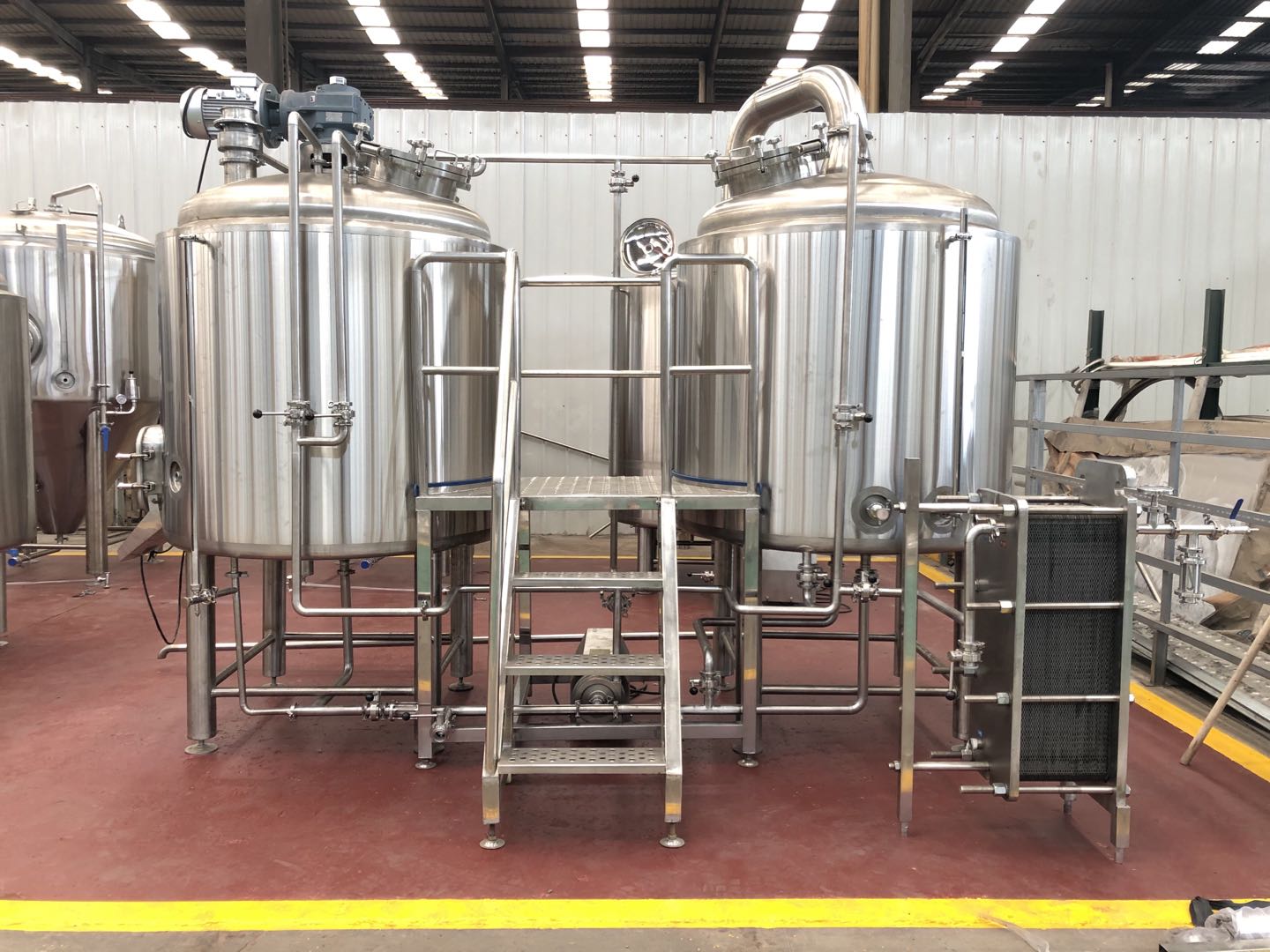
1000L Craft Beer Equipment
Read More -
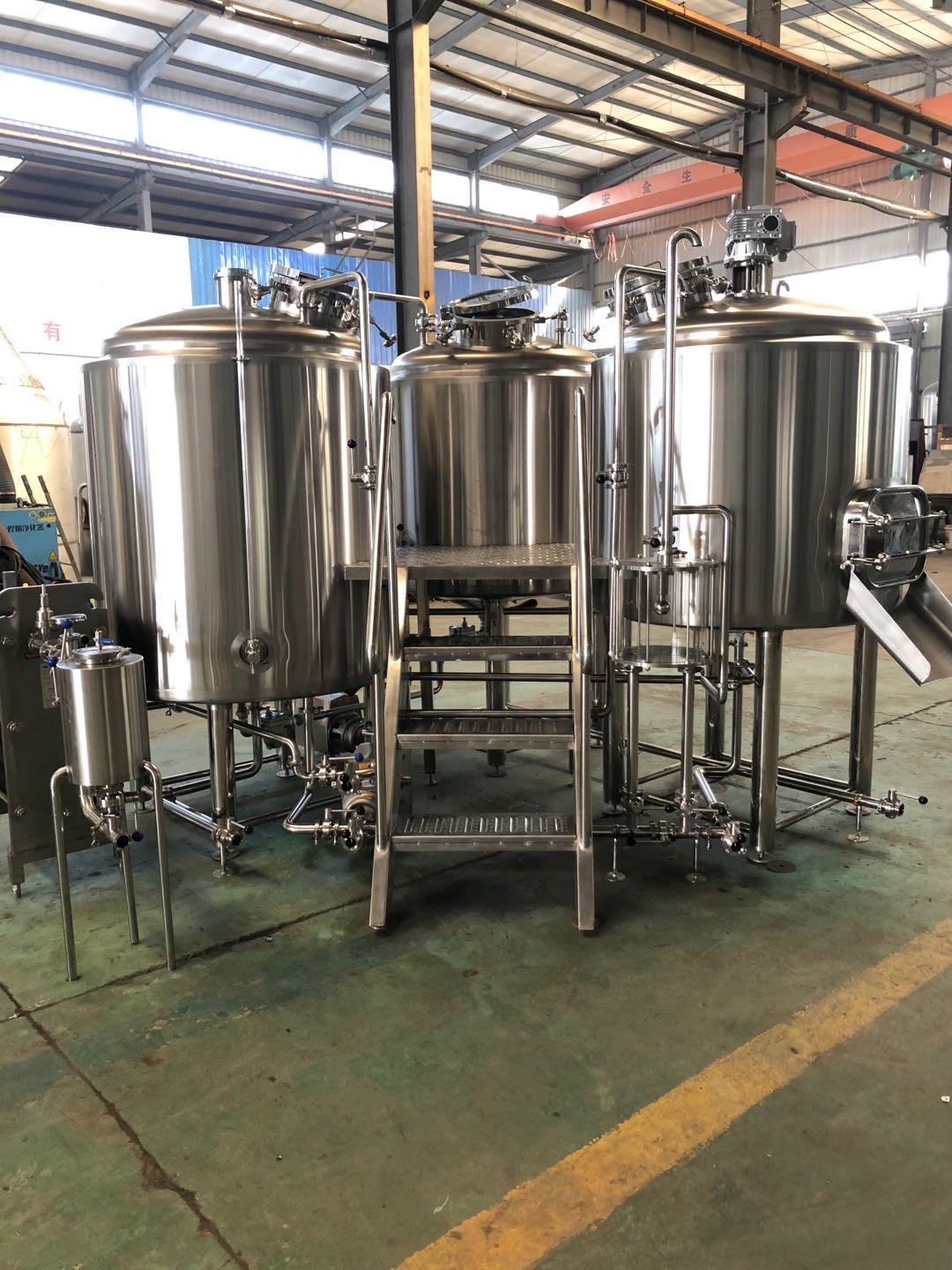
500L Beer Brewhouse
Read More -
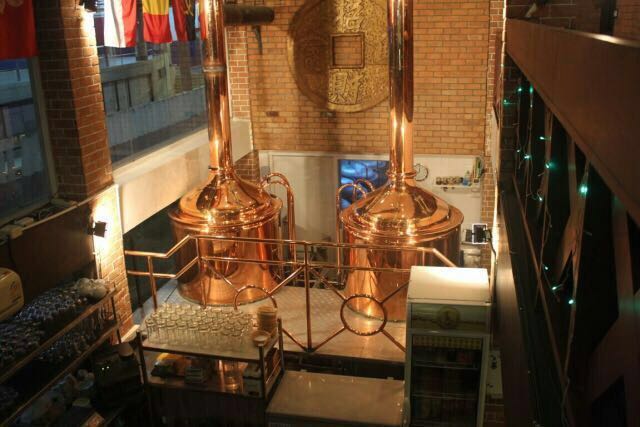
100L-300L Beer Brewing Equipme
Read More -
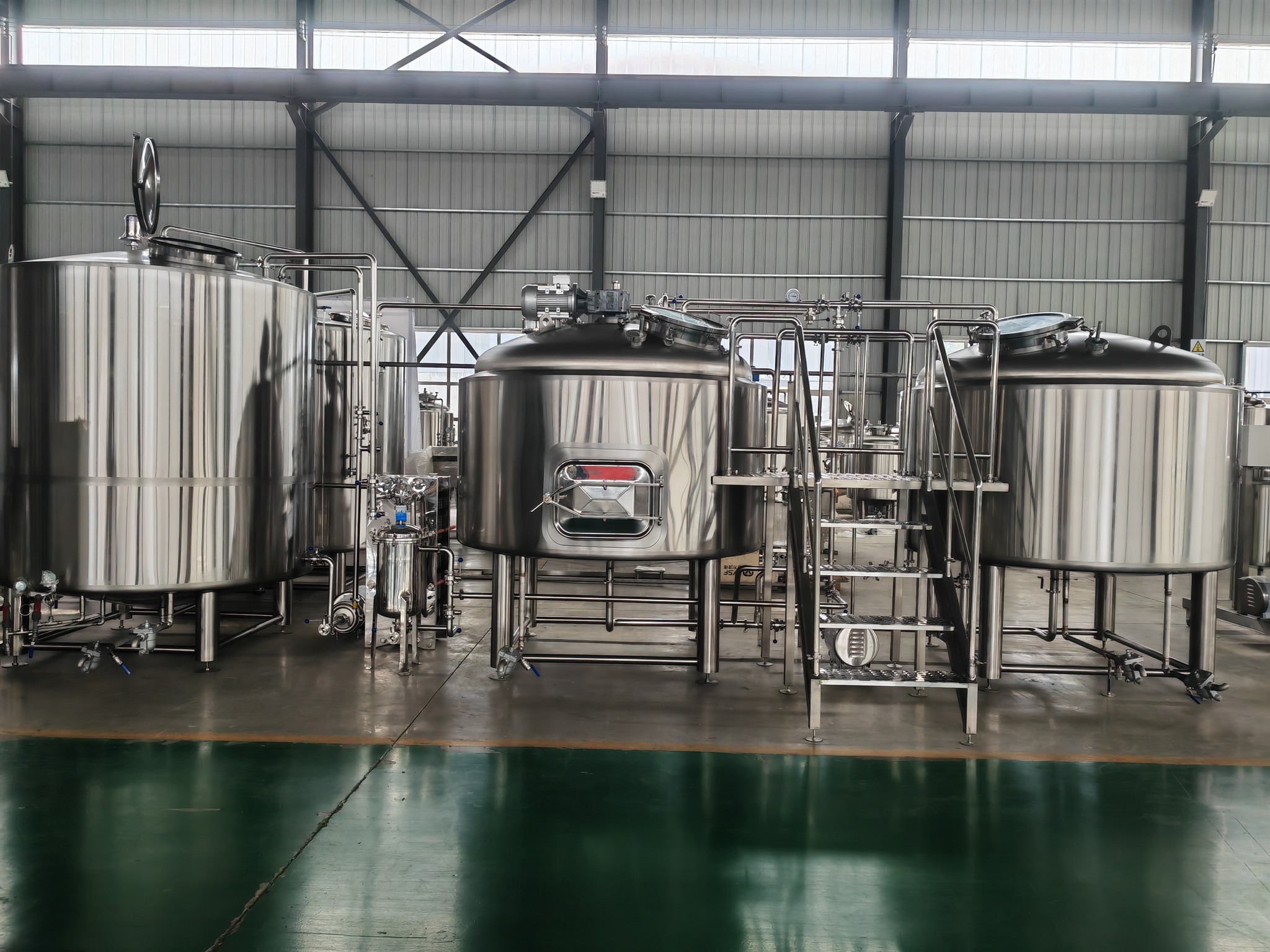
2000L Brewing Beer Equipment
Read More -
3000L Turnkey Brewery Equipmen
Read More -
300L-5000L Fermentation System
Read More -
300L-5000L Brite Beer Tanks
Read More -
Fruit Wine Equipment
Read More -
Beer Filling System
Read More -
Auxiliary Products
Read More